Dreaming about a few acres, a garden, maybe some goats, and a quieter pace of life? If Chattahoochee Hills is on your radar, you are probably looking for more than a house. You are looking for space, privacy, and a lifestyle that feels more connected to the land. This guide will help you understand what small-farm living in Chattahoochee Hills really looks like, what tradeoffs come with it, and how to decide if it fits your goals. Let’s dive in.
Why Chattahoochee Hills Feels Different
Chattahoochee Hills is not planned like a typical suburb. City planning documents describe it as a deliberately rural city, where mixed-use areas are meant to sit within a broader landscape of agriculture and rural residential land. The long-term vision focuses on preserving rural vistas, open space, and the area’s distinct character.
That planning approach shapes how the area looks and feels when you drive through it. In the city’s 2011 assessment, 71% of land was identified as agriculture or forestry, while only 6% was residential. Many properties have one home surrounded by pasture or woods, and homes are often set back far enough that you may barely see them from the road.
The road network adds to that rural setting. The 2021 comprehensive plan describes about 100 miles of roads and notes that the system is intentionally rural, with no signalized intersections. If you want a place that feels more open and less built up, that is a major part of the appeal.
What Small-Farm Living Can Look Like
In Chattahoochee Hills, small-farm living is not just tolerated. It is actively supported in the city’s planning framework. The 2016 plan explicitly encourages traditional farms, small farms, sustainable farming, and agritourism.
That matters if you want land that can do more than hold a house. The same plan says agricultural and forestry uses and traditional small-farm structures are allowed by right, with examples that include u-pick operations, horseback riding, wineries, and farm tours. For some buyers, that creates more flexibility than they might find in a standard subdivision setting.
It also helps explain why acreage here can feel different from simply buying a larger lot. You are often buying into a land-use pattern built around open space, buffers, and rural preservation. That means your focus should be on how the land functions, not just how many acres are listed on paper.
Think Beyond Acre Count
When you tour small-farm properties, acreage alone does not tell the whole story. In Chattahoochee Hills, the planning model emphasizes preserved open space and compact development in certain areas, so the usable portion of a property matters a lot.
You may want to look closely at where the build site sits, how much land is open versus wooded, and how the layout supports your goals. If you are picturing a garden, a barn, fencing, or animals, the arrangement of the land can matter just as much as the size.
This is especially important in rural residential and clustered development patterns. The 2016 plan notes that rural residential lots may be 3 or more acres, while hamlet-style development is clustered and expected to preserve 75% of the land as open space. That can be a great fit for some buyers, but it is important to understand how much land is truly usable for your intended lifestyle.
Daily Life on a Small Farm
A small farm lifestyle can be deeply rewarding, but it is also hands-on. If you are picturing fresh vegetables, gathering eggs, or caring for a few animals, it helps to know what that routine may involve.
UGA Cooperative Extension notes that feed is often the highest cost in livestock production. It also points out that goats and sheep can work well on smaller acreages, and that smaller grazing animals require less acreage and no heavy equipment compared with cattle. For buyers interested in hobby-scale livestock, that makes the lifestyle feel more realistic.
At the same time, animals still bring daily responsibility. Fencing, watering, forage, shelter, and ongoing care all become part of your routine. If that sounds energizing rather than overwhelming, Chattahoochee Hills may be a strong fit.
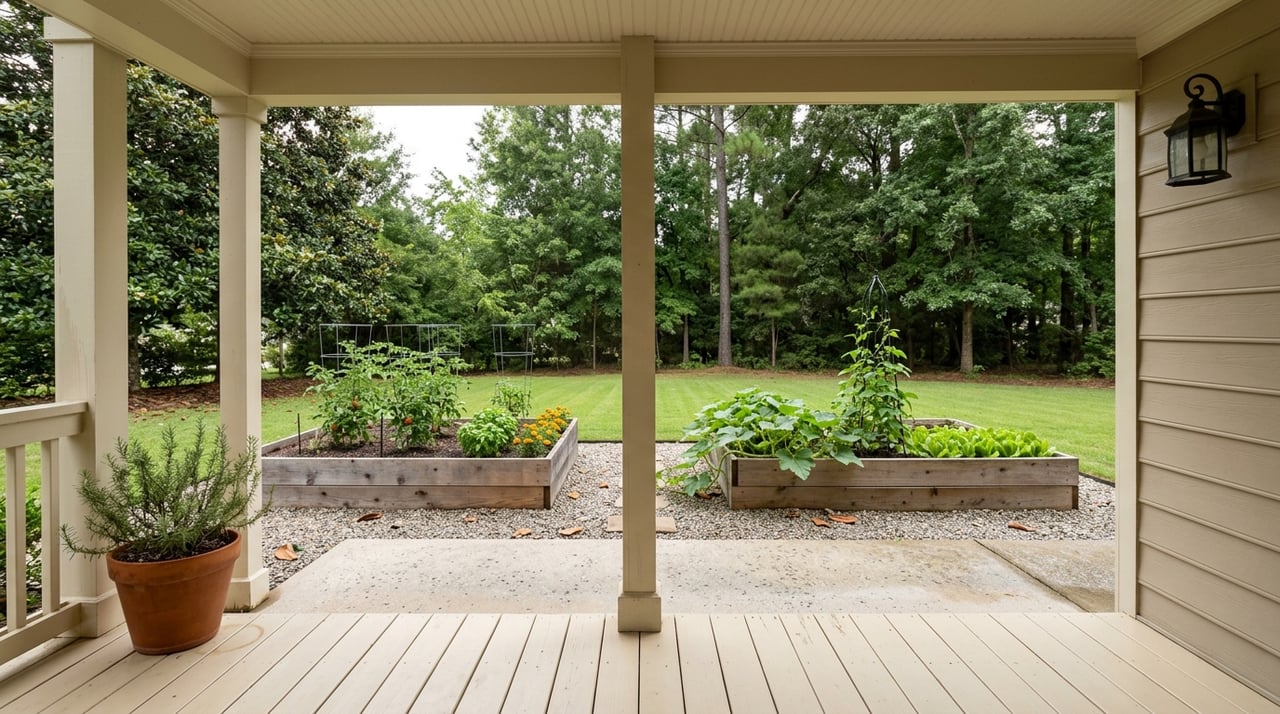
Gardens and local food culture are also part of the appeal here. Serenbe Farms says its farmers market hosts growers, artisans, craft-makers, and healthy food producers, with produce distributed within 40 miles through its CSA, market, and local restaurants. That kind of local food presence helps reinforce the area’s farm-oriented identity.
Recreation Adds to the Lifestyle
For many buyers, the appeal of Chattahoochee Hills goes beyond the property line. The area offers access to outdoor spaces that support the same slower, nature-connected lifestyle that draws people to small acreage.
Cochran Mill Park spans 800 acres in Chattahoochee Hills and includes woods, fields, and streams. It also features about 8 miles of new sustainable multi-use trails, rehabilitated older trails, and an ADA-accessible equestrian mounting block. If horseback riding, walking trails, and open natural landscapes matter to you, those features can add real value to daily life.
Chattahoochee Bend State Park, located in northwest Coweta County, adds another outdoor option nearby. The park covers 2,910 acres and includes five miles of river frontage, along with paddling, camping, fishing, and the 5.5-mile Riverside Trail. For buyers who want both land at home and room to explore nearby, this is part of the lifestyle equation.
There is also a practical side to location. Serenbe says it is about 25 minutes from Hartsfield-Jackson Atlanta International Airport, and Cochran Mill Park is described as 20 miles southwest of the airport. That means you can enjoy a rural setting while still staying reasonably connected to the broader metro area.
The Biggest Tradeoffs to Consider
The charm of rural property usually comes with more responsibility. In Chattahoochee Hills, one of the biggest differences from suburban living is infrastructure.
City planning documents say sewer is not the default outside Town, Village, and Mixed-Use Hamlet areas. Residential hamlet projects may use either community sewer or individual septic systems. If you are buying a small-farm property, septic is often something you will need to evaluate carefully.
UGA Extension states that in Georgia, the property owner is responsible for septic-system maintenance and repairs. It also notes that poor maintenance is the most common cause of failure, and tanks should be inspected and pumped periodically, ideally every 3 to 7 years. That makes septic a normal part of rural ownership, but it is still a system you should understand before you buy.
Private wells deserve the same level of attention. UGA Extension warns that groundwater can be vulnerable to contamination from septic tanks, pesticides, household chemicals, and animal yards. Wells located downhill from animal enclosures or a failing septic system may face greater risk.
Because of that, a rural property inspection should go beyond the house itself. You may want to pay close attention to:
- Well location
- Water testing
- Drainage patterns
- Septic system condition
- The placement of barns, paddocks, animal areas, and drainfields
Road access is another factor that can affect your day-to-day experience and your budget. City planning documents describe narrow rural roads and gravel segments that are intended to remain gravel. That does not mean access is poor, but it does mean you should expect a more car-dependent lifestyle and a property experience that may involve more upkeep than a neighborhood lot.
Who This Lifestyle Usually Fits Best
A small farm lifestyle in Chattahoochee Hills tends to fit buyers who want room to spread out and who are comfortable taking a more active role in property care. If you want acreage, privacy, gardens, animals, and access to nature, the area offers a strong foundation for that kind of life.
It can be especially appealing if you like the idea of a self-directed routine. Instead of neighborhood amenities and dense development, you may be trading for pasture, woods, trails, and a more rural rhythm. For many buyers, that trade feels worth it.
On the other hand, this may not be the right match if you want a low-maintenance property, immediate walkability, or full municipal-style utility service. Chattahoochee Hills is designed to preserve its rural character, and that character shapes the realities of ownership.
How to Decide With Confidence
If you are seriously considering a small-farm property in Chattahoochee Hills, the best next step is to get clear on how you want to live. Start by thinking about whether you want animals, a garden, open land, privacy, recreation access, or simply more breathing room. Then compare those goals to the practical realities of wells, septic, road access, and routine maintenance.
It also helps to tour properties with a lifestyle lens, not just a house-hunting lens. Look at the layout of the land, the usable acreage, and how the property may support your plans over time. A beautiful rural property is even better when it truly fits the way you want to live.
If you want help thinking through acreage, rural property tradeoffs, and what fits your goals in West Georgia, Tina Bantin would love to help you explore your options.
FAQs
Is Chattahoochee Hills a good place for a small farm lifestyle?
- Yes. City planning documents explicitly support traditional farms, small farms, sustainable farming, and agritourism, and much of the land-use pattern is centered on agriculture, forestry, and rural residential living.
What kind of land use is common in Chattahoochee Hills?
- The city’s 2011 assessment says 71% of land was agriculture or forestry and 6% was residential, which helps explain the area’s open, rural feel.
Are small livestock practical on acreage in Chattahoochee Hills?
- They can be. UGA Cooperative Extension notes that goats and sheep can work well on smaller acreages and usually require less land and equipment than cattle.
What utilities should buyers check on rural property in Chattahoochee Hills?
- Buyers should pay close attention to septic systems, private wells, drainage, and site layout, since sewer is not the default outside certain designated areas.
What maintenance comes with a small farm property in Chattahoochee Hills?
- In addition to regular home upkeep, you may need to manage septic maintenance, well safety, fencing, forage, watering, and general land care depending on how you use the property.
Is Chattahoochee Hills close to Atlanta amenities?
- It can still feel connected. Serenbe says it is about 25 minutes from Hartsfield-Jackson Atlanta International Airport, and Cochran Mill Park is described as 20 miles southwest of the airport.